Best AI Tools for Agriculture in 2026: Compare by Workflow
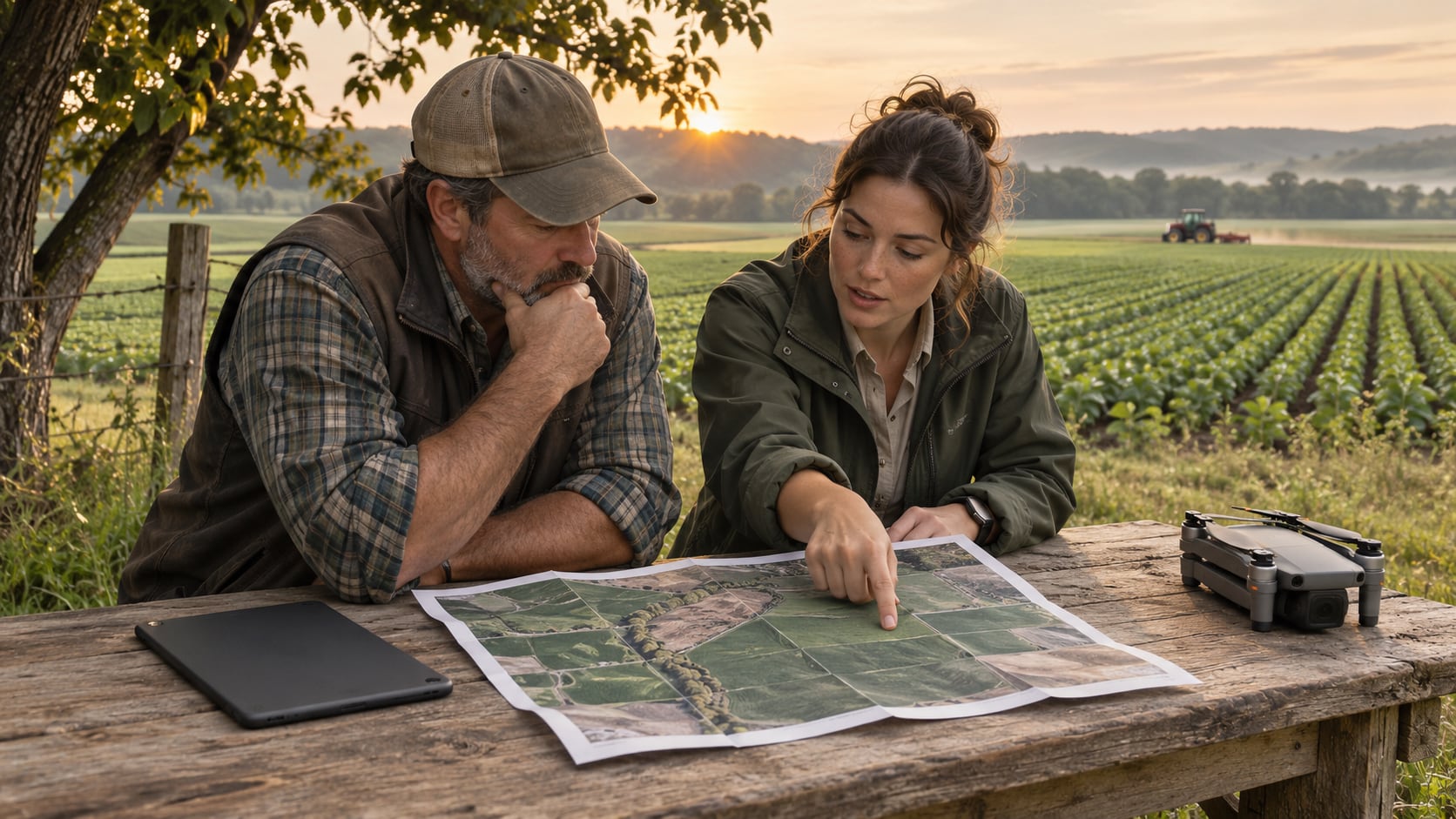
Choose an agricultural AI tool by the work you need to do. Start with scouting if you need to decide which fields to visit, forecasting if you need to plan around expected yields, or farm management software if you need to track work across farms. Use the table to see what each tool needs from you and what to verify in a trial.
How we compared them: We looked at each product’s stated job, the information or equipment it needs, the output a farmer receives, and the work still left to a person. The descriptions use vendor documentation. We last reviewed the original entries on September 28, 2026 and reviewed WiseYield on November 15, 2026. This guide compares workflows and requirements. We have not run a head-to-head field trial.
ZarSage is our product. Get the mobile app to start recording field work.
| Tool | Main job | What you need | What to check before choosing |
|---|---|---|---|
| John Deere See & Spray | Target herbicide at detected weeds | A compatible sprayer, crop and application fit | Supported crops, machine model, chemical label, and local rules |
| Taranis | Prioritize crop scouting from aerial imagery | Coverage and a scouting workflow | Image timing, ground validation, and service area |
| Climate FieldView | Organize and analyze equipment-linked field data | Compatible data sources and field records | Equipment connection and which data you can import |
| AGRIVI 360 | Plan and document farm operations | Crops, tasks, inputs, and a team to maintain records | Setup effort and fit for your farm’s scale |
| WiseYield | Forecast yields and review crop suitability | Farm location, crops and field boundaries for canopy monitoring | Coverage for your crops and region, forecast assumptions and plan limits |
| ZarSage | Coordinate field work, track what happened and ask AI about authorized farm records | Field boundaries, work records and team access | Roles, offline logging, exports and plan limits |
Targeted spraying: John Deere See & Spray
John Deere describes See & Spray as camera-based technology that detects weeds and triggers targeted herbicide application on supported sprayers. The work happens during an application pass, so it fits a farm trying to change where herbicide is applied. It does not replace checking the product label, field conditions, or which crops and machines are supported.
Choose this category when: targeted application is the decision and compatible machinery is already in the plan.
Crop scouting: Taranis
Taranis describes its service as high-resolution aerial imagery with AI-assisted, leaf-level crop insights. It can help a scout decide where to look first. An image finding still needs field context and, where relevant, a ground check before treatment.
Choose this category when: you need to prioritize inspections across many fields.
Equipment-linked field data: Climate FieldView
Climate FieldView presents tools for collecting, viewing, and analyzing farm data, including equipment connections and planting or harvest records. Its usefulness depends on the data your operation can bring in and the decisions you make from those records.
Choose this category when: machine data and field maps are the center of your workflow.
Farm operations: AGRIVI 360
AGRIVI lists field and crop management, task planning, input tracking, compliance, and financial analytics in its farm management product. This is a broad operations system; evaluate the work needed to set up and keep those records current.
Choose this category when: coordinating people, tasks, inputs, and seasons is the main need.
Yield forecasts and crop suitability: WiseYield
WiseYield describes yield forecasts based on soil, weather and crop history, along with crop recommendations, weather alerts and satellite canopy monitoring. Ask to see a forecast for a crop and region like yours. Check what data it used, how often it updates and what happens when a season or field has too little history.
Choose this category when: a yield estimate or crop suitability forecast would change a concrete decision, such as harvest staffing or the area you plant.
Field work and a shared farm record: ZarSage
Farm staff use ZarSage Mobile to log observations and work, even offline. Advisers and managers use the web console to see which fields need attention, assign work and export season reports. The same record brings together boundaries, crop cycles, observations, uploaded soil results and location-based weather. Historical weather is modeled for that location. With ZarSage Connect, ChatGPT or Claude can use the parts of the record you authorize. Ask the assistant to show its sources and identify which facts still need checking.
This is useful when the question is specific to your fields, such as what a soil report means in the context of a crop and recent work. It depends on the records you add and the permissions you grant. Read four examples of AI using farm records and our soil report walkthrough to see the kind of evidence a useful answer needs.
Choose this category when: you need field records your team can use to assign work, review completed checks and answer questions about a season. The ZarSage web console shows how the desk workflow fits with the mobile app.
How to choose an agricultural AI tool
- Name one recurring decision: where to spray, where to scout, how to coordinate work, or what your own records mean.
- List the inputs you already have. A tool that depends on machinery, imagery, or maintained records will be less useful without them.
- Check the output in a real workflow. Can someone trace it back to an image, field record, application map, or source?
- Ask who validates the result. Field conditions, labels, local rules, and professional judgment still matter.
Some farms need more than one category. A scouting service can identify places to inspect, an operations system can record the work, and a farm record can provide context for a later question. Those roles are complementary; none of the tools above has been independently benchmarked against the others here.
Frequently asked questions
Which AI tool is best for farming?
Choose one job to test. For scouting, see how the tool helps you decide which field to visit. For forecasting, check how it presents the assumptions behind a yield estimate. For farm management, assign a task and see whether the completed work shows up in the field’s record and season report.
What is a WiseYield alternative for managing field work?
If your priority is seeing which fields were checked, assigning follow-up work and reporting what happened across farms, evaluate ZarSage on that workflow. If you need yield forecasts or crop suitability recommendations, include WiseYield in the trial. Ask each vendor to run the same scenario with a representative field and show which records or forecasts the team can use afterward.
Can AI diagnose crop disease from an image?
Imagery can flag an area worth checking, but a field diagnosis may need a closer look, local context, and other evidence. Do not treat a remote image label as a treatment decision by itself.
Can ChatGPT or Claude answer questions about my own farm?
Yes, once you authorize access to the relevant records. Field staff can log work in the mobile app and authorized teams can review it in the web console. Follow the ZarSage Connect setup for your assistant and workspace.
Starting on paper first? Our free farm record templates cover a daily field work log, a crop scouting report, a fertilizer application record and a harvest and sales record. For the field walk itself there is a one-page crop scouting checklist, and for the season plan a crop calendar template.
Start with one field. Explore the web console or get the mobile app to record what happens in the field.