El Niño 2026-27: Five Field Decisions to Make Before It Peaks
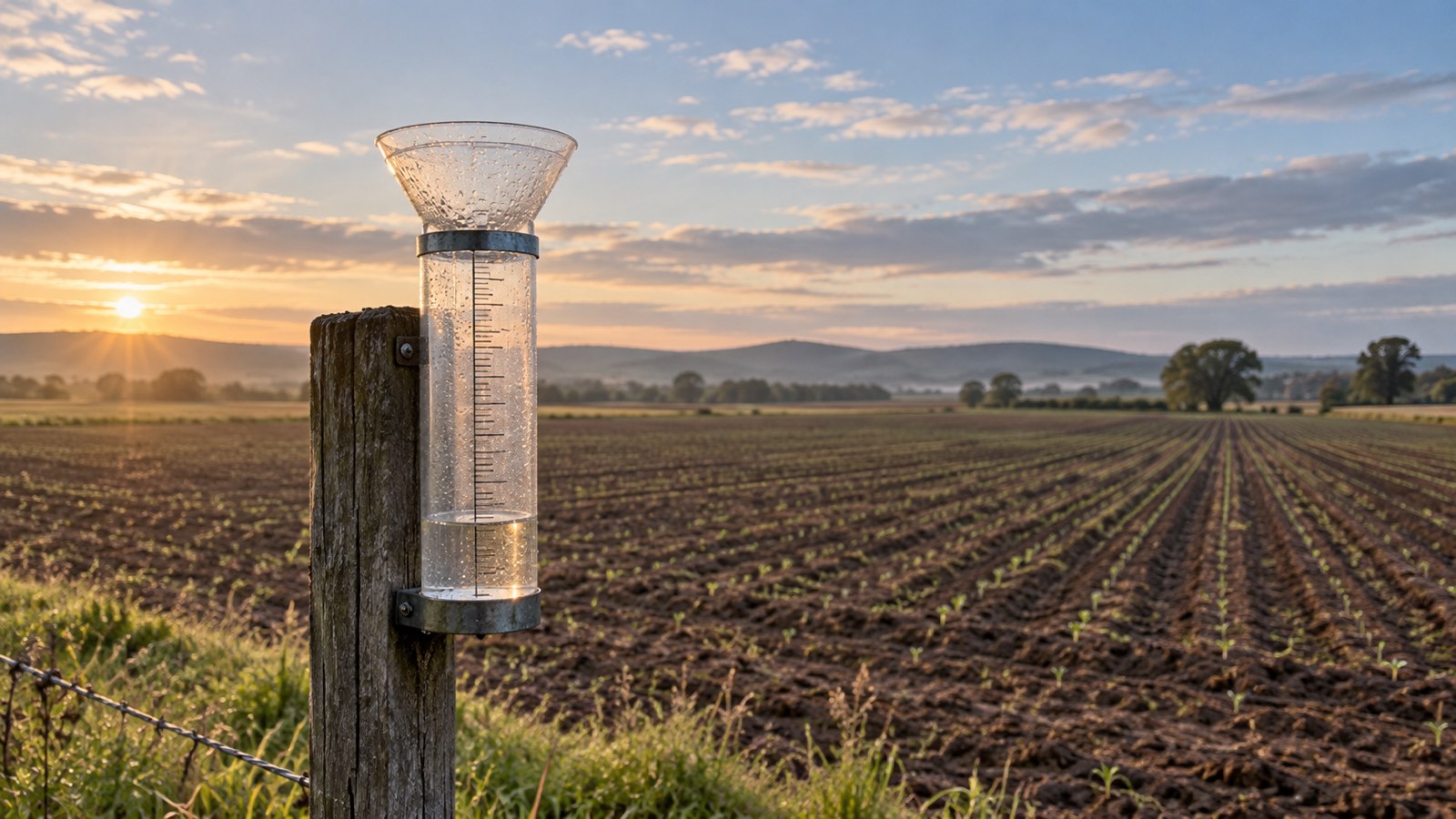
On 10 September, the US Climate Prediction Center kept its El Niño Advisory in place and gave a greater than 90% chance of a very strong event through the Northern Hemisphere autumn and winter. It also estimated a 75% chance that the October to December three-month Relative Oceanic Niño Index (RONI) would reach +2.5°C or more. RONI measures tropical Pacific warming relative to the wider tropics; it is not a temperature forecast for your farm.
The World Meteorological Organization’s seasonal update expects it to peak around November and December, with a positive Indian Ocean Dipole developing alongside it.
Headlines will now fill up with what this means for commodity markets. This post is about something smaller and more useful: the decisions you can still make on your own fields while there is time to make them.
What El Niño does, and what it does not do
El Niño shifts the odds of rainfall and heat across large regions. It does not write the forecast for your field.
A strong event makes some outcomes more likely. It does not make them certain, and two farms fifty kilometres apart can have very different seasons in the same El Niño year. The practical approach is to treat it as a reason to set clear triggers now, then let your own field’s weather tell you which plan to run.
Where the odds tilt
The regional risks discussed by WRI and in FAO’s 9 June preparedness assessment include the following. FAO’s probability estimates below are a dated forecast snapshot, not an updated September outlook for your field. Check the latest national and regional forecast before acting.
Drier than usual is more likely in:
- Southern Africa. FAO puts the probability of agricultural drought above 50% across major producing areas, including South Africa, Zambia, Zimbabwe, Botswana, Namibia, and parts of Mozambique. After the 2023-24 El Niño, 61 million people in the region needed assistance.
- Central America and the Caribbean. FAO gives a 70% probability of below-normal rainfall in the Dry Corridor.
- South and Southeast Asia. Rainfed rice and maize are most exposed, from India and Pakistan to Thailand, Vietnam, the Philippines, and Indonesia. In 2015, Southeast Asia lost around 15 million tonnes of rice.
- Eastern Australia, northern Brazil, and parts of the Sahel. In Australia, the typical dry signal is strongest in winter and spring; the Bureau of Meteorology explains why impacts vary by region and season.
Wetter than usual is more likely in:
- The southern United States, eastern Africa, and parts of Peru and Ecuador.
For Morocco, El Niño is one of several climate influences. The national meteorological service’s climate report discusses the role of North Atlantic circulation alongside ENSO. Use current Moroccan seasonal outlooks, local rainfall and soil moisture observations to plan sowing; El Niño alone should not determine the date.
Decision 1: Set a sowing trigger, not a sowing date
In regions leaning dry, the costly mistake is sowing into dry soil on the strength of one good rain, then losing the stand when the next rain is three weeks late.
Decide now what has to be true before you sow. For example: a set amount of rain over a set number of days, or soil moisture at a level you trust, before the seed goes in. Write it down. When the moment comes, you will be tired and under pressure, and a rule you made in advance is easier to follow than a judgment call made in the field.
If the trigger has not been met by a certain date, know what you will switch to. That is where the next decision comes in.
Decision 2: Line up your fallback crop and variety now
FAO’s own advice before this season is to secure drought-tolerant and short-cycle varieties early. In the 2023-24 El Niño, farmers in Central America who received short-cycle seed ahead of the drought were still able to produce vegetables through it.
Seed of the right variety runs out when everyone looks for it at the same time. If a late or dry start would push you toward a shorter-season variety, sorghum or millet instead of maize, or a lower-input crop on your weakest field, arrange the seed before you need it. It is much cheaper to hold a plan you never use than to find you have no plan in November.
Decision 3: Review fertilizer timing before committing inputs
Fertilizer is already expensive this year. The World Bank has reported sharp price increases as disruption through the Strait of Hormuz tightens supply.
Review nitrogen timing before the season. Where the crop, soil and local recommendations support it, split applications can let you adjust later doses to crop development and available moisture. There is no universal half-now, half-later rule, and dry conditions can prevent later fertilizer from reaching the roots. Base phosphorus and potassium decisions on a recent soil test interpreted for your crop and region; potassium can leach from sandy soils, so neither nutrient should be treated as guaranteed to remain available. We wrote about reading a soil lab report for fertilizer decisions earlier this year. University of Minnesota guidance illustrates why soil texture and local recommendations matter; its rates are for Minnesota corn, not a prescription for every farm.
Decision 4: Know your water, or your drainage
In drier regions, count your water before the season, not during it. How much is in the reservoir, the well, or the allocation, and which fields get it first if it runs short? Deciding that order now avoids spreading too little water over too many hectares later.
In wetter regions, the question flips. Check drainage on your low fields, and plan for possible increases in disease pressure and fewer suitable spray days. Recheck the product label’s wind limits, rainfastness requirements and current field conditions, and avoid temperature inversions; calm air is not automatically safe for spraying. A daily forecast alone cannot confirm a safe spraying window.
Decision 5: Secure feed and fodder early
If you keep livestock in a region leaning dry, FAO’s advice is to store fodder and protect water points before grazing conditions turn. Once a drought is under way, everyone is looking for feed at the same time.
Before all five: look at your own history
Your own records can help you interpret an El Niño outlook. They are a comparison tool, not a forecast of how this season will unfold.
Two recent El Niño seasons were 2015-16 and 2023-24. How did your fields do in those seasons? When did the rain arrive, how much fell, and which fields held up? If you do not have notes, historical weather estimates for your location can still help you compare those seasons with a typical year. Gridded estimates are not measurements taken on your field.
That comparison turns “a very strong El Niño is coming” into something you can plan around: “last time, our rains started three weeks late and the east block suffered first.”
Where ZarSage fits
I built ZarSage for this kind of field-level question. It brings the field’s forecast, weather history for its location, recorded soil results, and your work records together, with satellite signals on plans that include them. Its historical weather comes from the Open-Meteo ERA5 reanalysis archive, not a rain gauge on your farm. You can use the available history to compare heat, frost and rainfall patterns, and check daily spray-window screening against the forecast.
You can also connect it to ChatGPT or Claude, subject to the assistant’s account and workspace settings, and ask in plain language. For example:
Compare rainfall on North Field in the 2015-16 and 2023-24 seasons with an average year. When did the autumn rain arrive in each? Show the sources used.
The assistant can retrieve the available history for that field’s location and show the sources, coverage and missing information. It should explain what it cannot establish rather than filling gaps with a general summary of El Niño.
It is decision support, not a guarantee. No tool can tell you exactly how this season will unfold. What it can do is put your own history and your field’s current conditions in front of you before you commit money to the ground.
New subscribers start with a 7-day free trial on one field. Start with the field you are most worried about this season.
If you have a question about your own situation, write to me at musa.bello@zarsage.ai. It reaches me, not a support queue.